
“You can’t always get what you want,” sang Mick Jagger, “but if you try sometime you just might find you get what you need.”
The Toadies ended up getting both. It just took three decades.
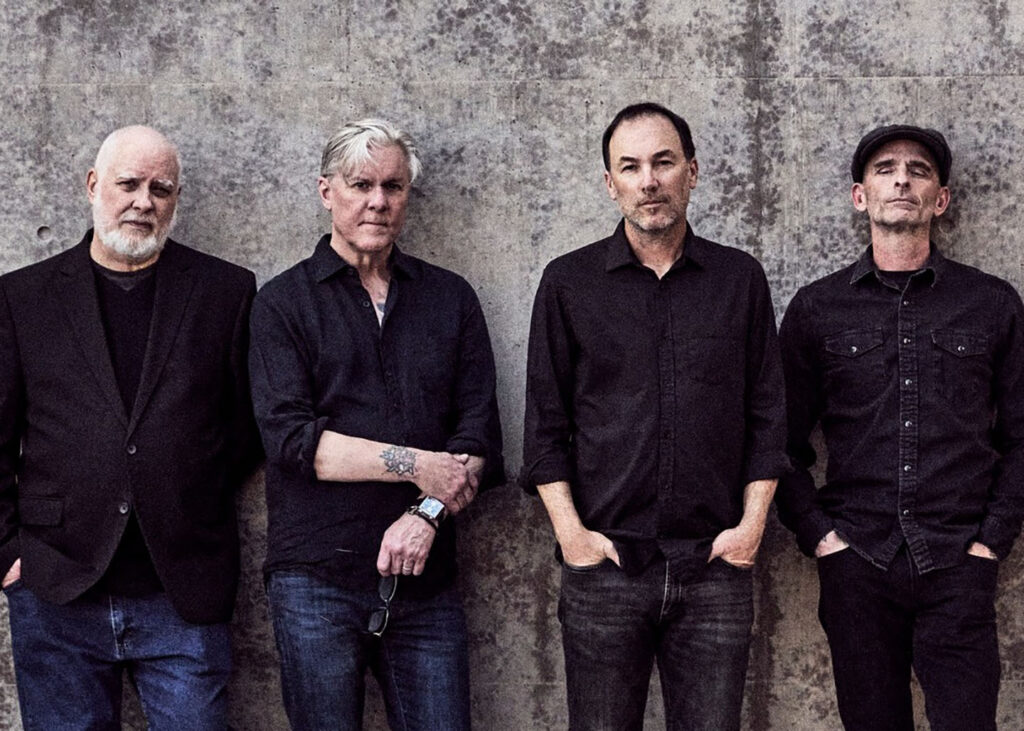
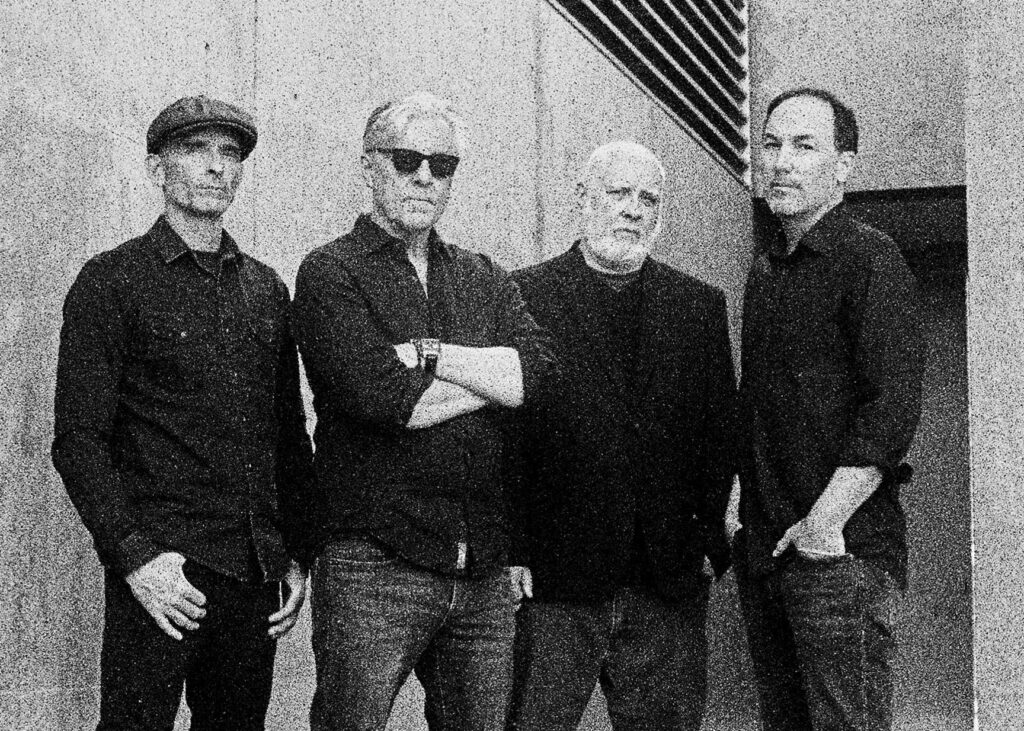
The Fort Worth quartet — vocalist and guitarist Vaden Todd Lewis, guitarist Clark Vogeler, bassist Doni Blair, and drummer Mark Reznicek — was signed by Interscope Records back in 1994. Armed with major-label backing and a real recording budget, the four musicians had their heart set on tracking their debut album with Steve Albini, the fiercely independent engineer who had helmed seminal records for Nirvana, The Jesus Lizard, and Pixies.
Interscope refused, steering them instead to producers Tom Rothrock and Rob Schnapf, who had recently worked with Beck and armed the band with a radio-ready mix.
From a commercial standpoint, the label’s decision paid off. The resulting album, Rubberneck, went platinum on the strength of the ubiquitous alternative rock single “Possum Kingdom.” It paved the way for a career that has spanned multiple decades, secured a permanent slot on rock radio, and established the band as a foundational Texas rock institution.
And now, on the 30th anniversary of the album that Steve Albini didn’t record, the Toadies have finally gotten their wish. Recorded strictly on analog magnetic tape edited by hand with razor blades at Chicago’s Electrical Audio shortly before Albini’s passing in May 2024, the Toadies’ new album The Charmer marks a full-circle moment for the band. By self-financing the sessions, the group now maintains 100 percent ownership of their master tapes, partnering with the Austin-based nonprofit label Spaceflight Records.
We talked to bassist Blair about working with Albini, martial arts boundaries, and the reality of human mistakes on stage.
BTT: What did the band dynamic bring to this specific record that sets it apart from previous releases?
Blair: Vaden is an incredible songwriter, but his previous material was written pre-pandemic. COVID changed everyone. Vaden went through some very dark, introspective periods, and that intensity is woven into the tracks. It’s a record about fighting your way through the darkness. When Vaden sent over the early demos, the lyrical depth blew us away. We realized that if he was going to expose his rawest thoughts so vulnerably, the rest of the band owed it to him to be flawless. Even if a part only required me to play straight eighth notes, I had to attack them with an intensity that matched the weight of his lyrics.
It turned out to be a really joyful experience, because the pandemic left us uncertain if we’d ever share a studio again. Best of all, we financed it entirely ourselves. We own the masters, and we partnered with Spaceflight Records, a great nonprofit label out of Austin, to release it.
BTT: After 30 years, you finally got to work with Steve Albini, who had more than a few engineering tricks up his sleeve. What did you think when you heard his final mix on the new album’s closing track?
Blair: I had gone out to lunch while Steve was mixing. When I came back, our guitarist Clark told me Steve was trying a Ramones-type mix. I looked at Steve and said, “So you’re just panning my bass completely to the left like Dee Dee Ramone?” He was a bit surprised I caught the reference. He didn’t know I was such a massive record nerd. We spent a lot of time talking about music, including his intense hatred and my deep love for Steely Dan. I love the Ramones and Steely Dan, they’re two of my favorite bands, so think of that what you will. So I just loved the way it turned out. I thought it was a really cool technique for him to use, especially to end the album with.
BTT: For most people, Albini is synonymous with Nirvana, but I read that The Jesus Lizard was one of your favorite bands he recorded.
Blair: I loved Steve’s entire catalog. I listened to his records just to study them, seminal albums like “Goat, Down,” and “Liar” by The Jesus Lizard, but also surf-rock acts like Shadowy Men on a Shadowy Planet. I’m a massive surf instrumental nerd myself and have put out instrumental projects with Mag Seven and The Tulsa Doom. While tracking, Steve kept pulling out iconic gear, offering me the specific bass amps David Sims used in The Jesus Lizard or Reid Diamond used in Shadowy Men. I tried them, but they didn’t fit my personal style. I wanted my own tone, and Steve respected that immediately. He was incredibly expedient: get in, get the sound right, and move on.
BTT: Other musicians have noted that Albini wouldn’t micromanage performances; he focused entirely on capturing the pure sonics as an engineer.
He trusted us because we’ve been a band for so long. People often mistake Steely Dan’s approach for wanting perfection, but they actually just wanted things to be right, even if it took forever. Steve and I connected on that concept of getting it right. The kid in me from 30 years ago would have flipped to play through David Sims’ rig, but at 52, I knew I needed to stick with the tone that worked for my hands. Steve gave me a few quick sonic cues — like adding a bit more midrange — and once we dialed it in, we locked it down.
BTT: Speaking of hands, let’s talk about practicing jiu-jitsu on the road. How do you reconcile a martial art that targets hands, fingers, and wrists with the fact that your hands are your livelihood on tour?
Blair: The great thing about jiu-jitsu is that the community understands boundaries. Because I’m touring, I always go to the head instructor at an open mat and explain that I’m a professional musician who needs to take it easy. I avoid hardcore rolls. Maynard (James Keenan) from Tool is also very particular about this. He sets up a mat and trains with a black belt for an hour right before going on stage, though all he has to do is hold a microphone. For him, and for me, it helps process things mentally.
People think an art where you are constantly sweating and bleeding on each other wouldn’t have boundaries, but it does. If I ask someone to lay off the wrist locks or avoid a wobbly knee, they respect it. I also have to trust myself to get out of dangerous spots and avoid rolling with unpredictable white belts. At my home gym, Guetho Jiu-Jitsu in Amarillo, they completely look out for my arms — though they will still happily choke me out by the neck. It’s my therapy.
BTT: What can an audience member who may not be familiar with your catalog expect from a current Toadies set?
Blair: They’re going to see an authentic, high-energy rock band playing completely live. We don’t use backing tracks, sequencers, or programs; it’s a real, human performance, mistakes and all. Audiences are starved for that raw element right now.
We’re getting some of the strongest responses of our career on this tour. For the first time in my history with the band, when we introduce new material, the crowd doesn’t sigh and wait for “Possum Kingdom.” They are actually screaming and singing along to the new tracks, which is an incredible feeling.
The Toadies with Local H and Olive Vox at The Pageant, Sept. 21
Photos: Steven Visneau